It's an interesting question. I've never really been able to definitively answer it. If you look at most material on the Internet, they'll talk about Red Wigglers, not African Nightcrawlers since the former is more suitable for US and Canada where most of the English sites are. Red Wigglers supposedly feed on top and leave their castings at the bottom. That's probably why flow through bins work; the vermicomposter can just harvest from the bottom.
The problem with my experience with African Nightcrawlers is that I've seen them deposit castings on top of the bin. In fact, I even showed a video about it. However, from my experience with my worm tray, it seems like these worms also deposit their castings at the bottom. That's why they fall down to the catch tray.
That said, for now I'm utilizing the tray a little more since harvesting is easier. The castings that fall through the tray are fairly dry and are more appropriately termed worm castings rather than vermicompost simply because most of the material falling through are vermicast with minimal other organic material.
Does anyone know the true behavior of African Nightcrawlers? Where do they poop?
Tuesday, December 28, 2010


Saturday, December 25, 2010
Sack Vermicomposting
Most articles you would read on the Internet regarding vermicomposting will talk about vermicomposting using plastic or wooden bins / tubs. But you probably have not read anything about sack vermicomposting. It's something I tried a few months ago. Flashback to around two months ago. I got a sack (the type that breathes). The consistency of the sack material was like plastic. I'm not sure what it's called but I got it from some garden soil that I bought months back. I put in about two whole newspapers (not pages, but whole newspapers) and soiled them. I placed the sack under a tree in the garden. It was on soil, not on cement. Then I placed all sorts of organic materials there, from fresh leaves to banana peels and whole eggshells. I got it about 3/4 full. Once in a while, I'd still add fallen leaves and dead plants. I poured urine inside the sack a couple of times to add to the nitrogen content and to hasten decomposition. I also placed a paper cup inside with a couple of worms (4-5 I think) including some substrate. Once or twice a month, I'd put some water inside to make sure the contents are moist.
To close the sack, I just fold the top and put two medium sized rocks on top. As you can see, it's not the most high tech system, right? Flash forward to today and most of the contents are gone. I mean, the level of material has gone down by about 90% I would estimate. To my surprise, I also found lots of vermicast. However, it seemed a bit brown to me. Strange. Most of the vermicast I produce in other bins are black. I'm not sure what that means, but the contents sure look like vermicast to me. Considering I just put in a few worms in there, it's great to see that they're still alive and working. I'm not sure if they've multiplied though but I have seen a couple and they're all big African Nightcrawlers now. They were just babies when I put them in.
Cool huh? I'm not sure exactly when I started it, but it can't be more than three months. I guess I'm pretty happy with the results. I'll keep putting the excess organic stuff I have there since I won't care if the sack leaks (it's on soil) or smell (since it's outdoors).
Try it. It's as low maintenance as you can get. It's like an outdoors organic garbage can with a few worms thrown in. Then it's autopilot from there.
To close the sack, I just fold the top and put two medium sized rocks on top. As you can see, it's not the most high tech system, right? Flash forward to today and most of the contents are gone. I mean, the level of material has gone down by about 90% I would estimate. To my surprise, I also found lots of vermicast. However, it seemed a bit brown to me. Strange. Most of the vermicast I produce in other bins are black. I'm not sure what that means, but the contents sure look like vermicast to me. Considering I just put in a few worms in there, it's great to see that they're still alive and working. I'm not sure if they've multiplied though but I have seen a couple and they're all big African Nightcrawlers now. They were just babies when I put them in.
Cool huh? I'm not sure exactly when I started it, but it can't be more than three months. I guess I'm pretty happy with the results. I'll keep putting the excess organic stuff I have there since I won't care if the sack leaks (it's on soil) or smell (since it's outdoors).
Try it. It's as low maintenance as you can get. It's like an outdoors organic garbage can with a few worms thrown in. Then it's autopilot from there.
Monday, December 20, 2010
Calcium and Worms
For a couple of months now, I've been wondering how to make my African Nightcrawlers reproduce faster. That's what we all want, right? Mostly, I would see that the conditions have to be right: moisture, air and bedding. But then I read something new. Worms need calcium to stimulate reproduction. Is that proven? I can't say, but it's something worth trying. I have been adding crushed eggshells in my worm bins though, but not for that. I've read that worms like to crawl inside the eggshells (the ones I didn't crush). I've also read the crushed eggshells is good as grit and helps the worms digest their food. Finally, being a source of calcium, it helps make the bin contents more alkaline. A lot of feed sources, like coffee grounds, are acidic. But from hereon, I'll make sure to add lots off eggshells! As I've read in one site, it makes worms want to do the wild thing. ;-)
Wednesday, December 15, 2010
Vermicomposting Challenge: Indoor Worm Bin Conclusion
Almost two months ago, I created an indoors worm bin made of an old 5-gallon water container. My objective was to see how long it would take to fully compost a full container with just 10 small African Nightcrawlers. Well, I'm prematurely ending that experiment. The contents are starting to look icky. For some reason, there's so much moisture in the bin already. I didn't put a catch basin below the bin (just a newspaper) so it has already drenched the newspaper. Rats, right? Anyway, the volume has declined to about 1/5, but the newspapers are also packed tight.
 I can't tell if the worm count has increased since I'm not very comfortable poking around this bin. However, I found an 8-inch worm! I am guessing my little worms have matured already.
Well since it was all too wet, I ended the experiment by adding a good number of dry shredded newspaper on top of the contents. Oh well, I guess it'll be an active bin again.
Just for your viewing pleasure too, I added a picture of my worms. These came from my recent vermicompost harvest. I think the lesson there is not to use the harvested vermicompost at once. I left them for two weeks at an ice cream container and lots of new worms showed up! Apparently, there were lots of cocoons in the vermicompost.
 I can't tell if the worm count has increased since I'm not very comfortable poking around this bin. However, I found an 8-inch worm! I am guessing my little worms have matured already.
Well since it was all too wet, I ended the experiment by adding a good number of dry shredded newspaper on top of the contents. Oh well, I guess it'll be an active bin again.
Just for your viewing pleasure too, I added a picture of my worms. These came from my recent vermicompost harvest. I think the lesson there is not to use the harvested vermicompost at once. I left them for two weeks at an ice cream container and lots of new worms showed up! Apparently, there were lots of cocoons in the vermicompost.
Sunday, December 12, 2010
VERMICOMPOSTING AND HERB GARDENING IN QUEZON CITY: UPDATES
I haven't really taken a lot of pictures lately, so I'll have to describe my updates. I guess one reason is that I've been getting acquainted with uploading videos on Youtube. Yes, I'm a little late in the game but it's fun nonetheless. Anyway, since I mentioned the video already, I'll start with that. Over the past month or so, I've been able to harvest about a grande cup worth of vermicompost every week. So that's also about how much I've been feeding my worms. In the video, I talked about how to keep vermicompost fresh. It does have an expiration date you know (or so I've heard). That seems logical enough since vermicompost is called living soil and one of its key benefits is having beneficial microbes. For example, in one video, it explained how vermicompost changes the chemical signals released by seeds so that pathogens "can't detect" the seed. This helps in the germination process. So keep vermicompost long enough and the microorganisms decline. In some sites, I've read that the microorganisms become dormant. Whichever is more accurate, it seems safe to say that vermicompost is best used fresh. Please correct me if that's soooooo wrong. ;-)
ANYWAY, my small advice was to keep a few worms and add some moisture in the harvested vermicompost. Worms will eventually die down if the contents are nothing but castings, but in my case it looked like it was about 85% processed. So it was accurately termed vemicompost and not pure worm castings. I figured as long as the worms keep processing, the microbial activity will remain high. BUT, I added too much moisture in the cup and it started to smell. I would stick with my suggestion to keep the moisture, but in moderation.
Oh dear, this seems long already. I'll talk about the tedious process of harvesting basil seeds next time. I am betting there's an easier way; I just haven't discovered it yet. Oh I should also talk about the really huge worm I found in one of my bins.
ANYWAY, my small advice was to keep a few worms and add some moisture in the harvested vermicompost. Worms will eventually die down if the contents are nothing but castings, but in my case it looked like it was about 85% processed. So it was accurately termed vemicompost and not pure worm castings. I figured as long as the worms keep processing, the microbial activity will remain high. BUT, I added too much moisture in the cup and it started to smell. I would stick with my suggestion to keep the moisture, but in moderation.
Oh dear, this seems long already. I'll talk about the tedious process of harvesting basil seeds next time. I am betting there's an easier way; I just haven't discovered it yet. Oh I should also talk about the really huge worm I found in one of my bins.
Tuesday, December 07, 2010
Harvesting Cinnamon Basil Seeds
 Let me start of by saying that I don't know how to gather seeds from my basil plants. I just basically did what was intuitive. Two months ago, my basil plants started flowering. I didn't really want them to go to seed since I've read that the plant dies afterward. However, a very nice person mailed me some herb seeds (Rosemary, Parsley, etc). I figured it would be fitting if I sent her some of my seeds too since I knew that she didn't have cinnamon basil.
  Well it's been two months. I figured the flowers would've matured already. Intuitively, I should wait for the pods to dry before harvesting. However, I figured if it did it too late, the pods would release the seeds and I might end up harvesting nothing. Some of the pods were drying up, but most still seemed fresh. I have about 7-8 cinnamon basil and Thai basil plants that are flowering. I cut them all.
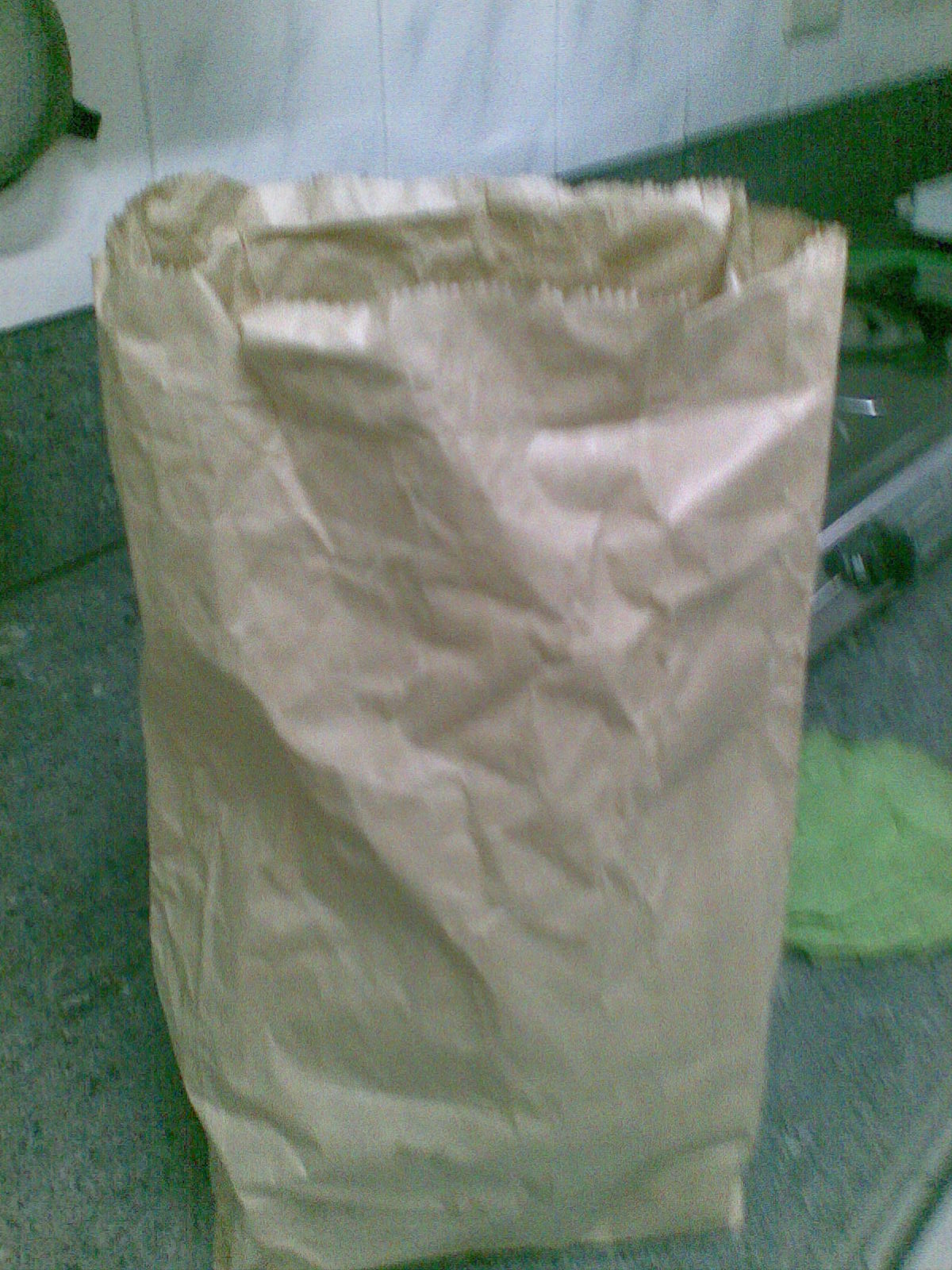 I figure I should dry them for a week or so. I put the harvested flowers / pods into a dry paper bag inside the house. I hope I'm doing the right thing.
Subscribe to:
Posts (Atom)


